Careers
Sterile Processing Technician Salary and Careers
What Does a Sterile Processing Technician Earn, and Where Can the Career Go?
The national median sterile processing technician salary was $47,700 a year in May 2025, or $22.93 an hour, across 77,420 jobs, according to the Bureau of Labor Statistics. The middle half earned $39,800 to $58,570. Most people start as a technician with HSPA's CRCST or CBSPD's CSPDT, then move toward instrument specialist, lead, educator, supervisor, manager and director roles. You can compare the 212 verified training programs that lead into the work.
What a Sterile Processing Technician Does on a Shift
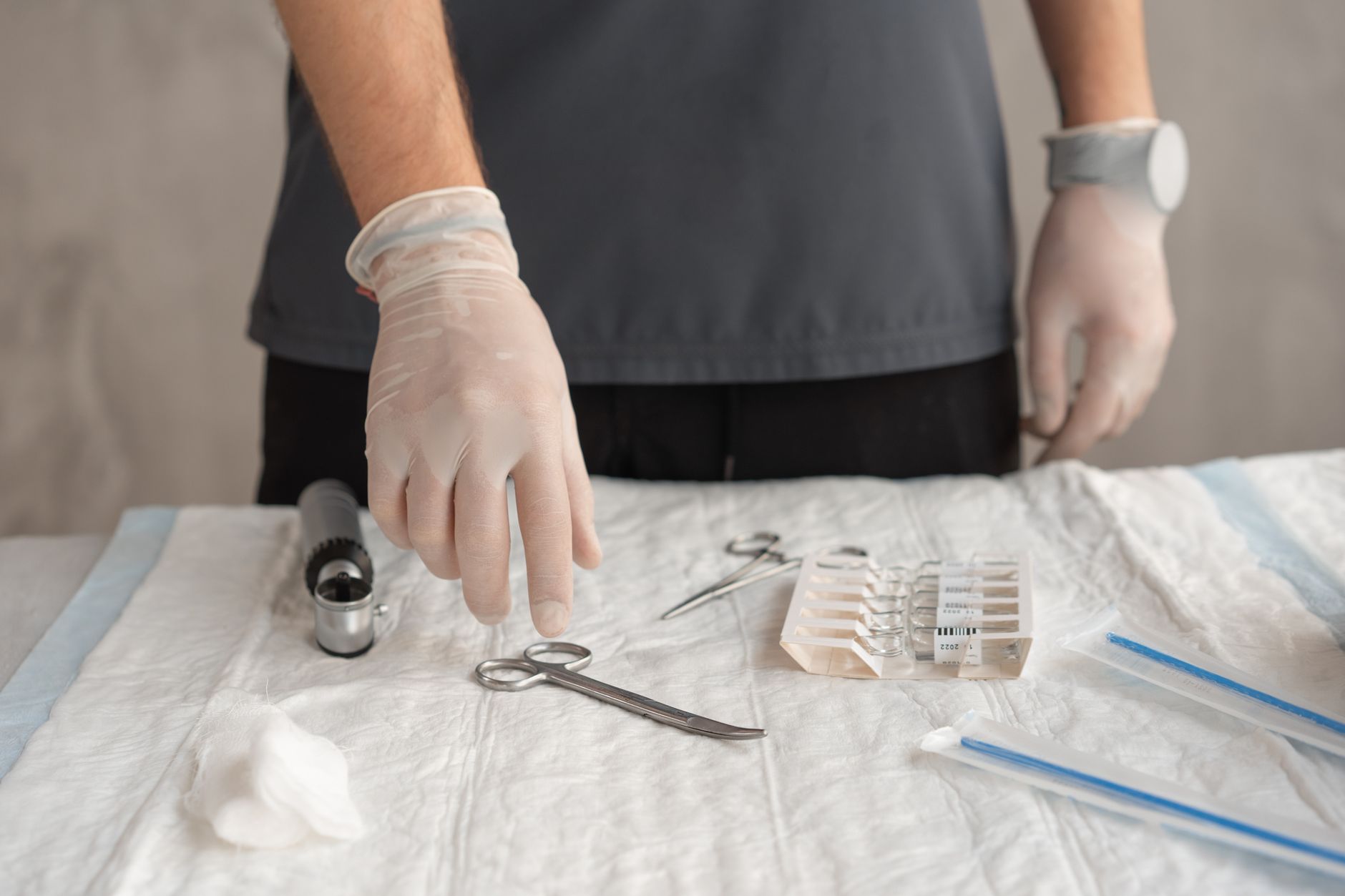
Every instrument used in surgery comes back to the sterile processing department dirty, and it has to leave clean, complete, sterile and traceable. That loop is the whole job. The clearest sterile processing technician job description comes from HSPA itself: the 400 hands-on hours it requires for the CRCST are split across the five areas you will actually work in.
| Work area | What you do there | CRCST hours required |
|---|---|---|
| Decontamination | Receive used instruments, sort them, clean them by hand and in washers | 120 |
| Preparing and packaging instruments | Inspect each piece, assemble trays to a count sheet, wrap or containerize sets | 120 |
| Sterilization and disinfection | Load and run sterilizers, read indicators, keep cycle records | 120 |
| Storage and distribution | Store sterile sets and send them to surgery and patient floors | 24 |
| Quality assurance processes | Check work against the department’s standards and log problems | 16 |
Decontamination Comes First
The decontamination side is the dirty side. You wear full protective gear, take apart instruments with hinges and channels, and clean them before anything else can happen. HSPA weights it as heavily as assembly and sterilization: 120 of your 400 hours.
Assembly Is Where Skill Shows
On the clean side you inspect instruments under magnification, test that scissors cut and clamps close, and build each tray so the surgical team finds exactly what the count sheet promises. A missing or damaged instrument can delay a case, which is why instrument knowledge is the skill that gets technicians promoted.
Sterilization Ties It Together
You run steam and low-temperature sterilizers, check the chemical and biological indicators, and record each load so any set can be traced back to its cycle. Then sterile stock goes to storage and out to the operating rooms and floors.
Central Service Technician and the Other Names for This Job
The same job carries several titles, and you will see all of them in job postings:
- Central service technician, common where the department is called central service or central sterile supply. HSPA’s entry credential is the Certified Registered Central Service Technician (CRCST).
- Sterile processing technician, or SPD technician, after the sterile processing department.
- Decontamination technician, for roles that stay on the dirty side.
- Medical equipment preparer, the federal name. The Bureau of Labor Statistics files all of these under SOC 31-9093, so its pay figures cover every title above.
HSPA, the Healthcare Sterile Processing Association, was formerly IAHCSMM, so you will still meet the old name on older study materials. A posting that asks for “central service technician certification” means the CRCST from HSPA or the CSPDT from CBSPD.
Sterile Processing Technician Salary, Explained
The Bureau of Labor Statistics put the national median at $47,700 a year in May 2025, which works out to $22.93 an hour at the median. The average (mean) was higher, at $50,510, because the top earners pull it up.
Read the spread as a map of where you might land:
- Starting out: the bottom tenth earned $36,410 or less and the 25th percentile was $39,800. New technicians in lower-paying states often start in this band.
- Experienced: the 75th percentile was $58,570.
- Top tenth: $69,950 or more, usually leads, specialists and technicians in high-wage states.
Location matters more than almost anything else. California had the highest state median at $61,370, ahead of Washington at $58,830, Massachusetts at $58,580 and New York at $57,320. At the other end, Mississippi’s median was $35,160 and Alabama’s $35,800. If you live in a high-wage state, see the programs in California or New York.
Job counts follow population. California employed 8,720 technicians, Florida 5,250, New York 5,190 and Texas 4,520. The state-by-state table further down this page lists every state’s median and range.
Where Sterile Processing Technicians Work
Most jobs sit in a hospital’s sterile processing department, usually close to the operating rooms it supplies. HSPA’s rule that CRCST hours must be logged in a sterile processing department, on a paid or volunteer basis, shapes how people get in: a hospital is where the hours happen.
That is good news if you already work in a hospital. Environmental services staff, patient transporters and surgery department aides can often transfer into the department and log hours on the job. HSPA accepts sign-off on those hours only from someone above you who watched the work, such as a lead technician, supervisor, manager or hospital educator. A fellow technician or a private instructor can’t sign them.
Surgery centers and clinics that reprocess instruments hire technicians too. Once you have a few years in and a current credential, travel contracts at short-staffed hospitals become an option.
Sterile Processing Pay, From Entry Level to the Top Tenth
- 10th percentile
- $36,410
- 25th percentile
- $39,800
- Median
- $47,700
- 75th percentile
- $58,570
- 90th percentile
- $69,950
National annual wages for 77,420 medical equipment preparers (SOC 31-9093), the BLS occupation for sterile processing and central service technicians, OEWS May 2025. The median hourly wage is $22.93.
Sterile Processing Technician Pay by State
BLS OEWS May 2025, state annual wages for medical equipment preparers, highest median first. Each state link goes to that state's verified programs.
Where a Sterile Processing Career Leads
BLS publishes one wage series for the whole occupation, so the pay figures above cover every role below; none of these titles has its own BLS figure.
Sterile Processing Technician
Cleans, inspects, assembles, packages and sterilizes surgical instruments and equipment, and tracks each tray from decontamination to the operating room.
Entry level · Credential most tied to the role: CRCST (HSPA)
Central Service Technician
Another name for the same job, common in hospitals whose department is called central service or central sterile supply; HSPA's CRCST credential carries the title.
Entry level · Credential most tied to the role: CRCST (HSPA)
Decontamination Technician
Works the dirty side of the department: receives used instruments, sorts them and cleans them by hand and in washers before they move to inspection and assembly.
Entry level · Credential most tied to the role: CRCST (HSPA)
Surgical Instrument Specialist
Focuses on instrument identification, inspection, assembly and care; HSPA's Certified Instrument Specialist (CIS) credential is built for this work.
Specialist level · Credential most tied to the role: CIS (HSPA)
Traveling Sterile Processing Technician
Takes short-term contracts at hospitals that need staff, usually after some years of experience and with a current certification.
Specialist level · Credential most tied to the role: CRCST (HSPA)
Infection Control Specialist
Infection prevention roles sit beside sterile processing in hospitals; they usually need further clinical education, and SPD experience is one route toward the work.
Specialist level
SPD Quality Assurance Coordinator
Audits trays, sterilizer records and processes against the department's standards, and tracks errors and corrective actions.
Lead level · Credential most tied to the role: CRCST (HSPA)
Sterile Processing Educator
Trains and orients new technicians, runs competency checks and keeps staff current on instrument and equipment changes.
Lead level · Credential most tied to the role: CRCST (HSPA)
Sterile Processing Supervisor
Runs a shift: staffing, workflow, instrument turnaround for the operating rooms and first-line problem solving; HSPA's Certified Healthcare Leader (CHL) credential covers this level.
Leadership level · Credential most tied to the role: CHL (HSPA)
Sterile Processing Manager
Manages the department's staff, budget, equipment and compliance, and works with surgical services on case-cart and instrument needs.
Leadership level · Credential most tied to the role: CHL (HSPA)
Sterile Processing Department Director
Leads sterile processing across a hospital or health system, often alongside other surgical support services.
Leadership level · Credential most tied to the role: CHL (HSPA)
How Certification Shapes Hiring
Two credentials open the entry level, and HSPA adds specialist and leadership credentials on top.
| Credential | Body | What you need | Exam fee |
|---|---|---|---|
| CRCST (Certified Registered Central Service Technician) | HSPA | 400 SPD hours, before the exam or within six months after it | $140 |
| CSPDT (Certified Sterile Processing and Distribution Technician) | CBSPD | A training course passed with 70 or higher, or 12 months of SPD work, among other routes | $135 |
| CIS (Certified Instrument Specialist) | HSPA | A current, full CRCST plus 200 more SPD hours | $140 |
| CHL (Certified Healthcare Leader) | HSPA | Aimed at current and aspiring leaders | $140 |
The CRCST is the credential most programs teach to: 120 of the 212 verified programs prepare you for it, against 46 for the CSPDT. The difference that matters to a new hire is the hours rule. CBSPD lets a training course stand in for work experience, so you can become a CSPDT straight out of class. HSPA lets you test first and hold provisional CRCST status, but you must log 400 hours within six months or lose it, with one 2-month extension available if you are already working or volunteering in a department.
That is why clinical hours inside a program are valuable. 164 programs include clinical or lab hours, and 43 state hours that reach the full 400. Plan yours with the CRCST hours planner, and read the CRCST guide and the CSPDT guide before you choose. Whether your state has a certification law for hospital technicians is covered in the state-by-state requirements guide.
Keeping the CRCST takes 12 continuing education credits a year and a $50 renewal fee, so plan for ongoing learning.
From Technician to Director: The Sterile Processing Career Ladder
Sterile processing has a real ladder, and most of it is climbed inside the same department.
Technician. You learn every station, from decontamination to case carts. Most people spend their first years here, building speed and instrument knowledge.
Specialist. Technicians who master instruments can earn HSPA’s CIS, which requires a full CRCST and 200 more department hours beyond the ones counted for the CRCST. HSPA also certifies endoscope reprocessing, and two verified programs prepare students for that credential.
Lead, quality and education roles. A lead technician runs a section of the shift. A quality assurance coordinator audits trays and sterilizer records and tracks corrective actions. An educator trains new hires and runs competency checks. These are the roles that sign off on CRCST hours, so they are trusted with the department’s standards.
Supervisor. A supervisor owns a shift: staffing, workflow, and getting instruments to the operating rooms on time. HSPA’s CHL is aimed at people in or heading toward this level.
Manager and director. A manager runs the department’s people, budget, equipment and compliance, and works with surgical services on what each case needs. A director leads sterile processing across a hospital or health system.
The Bureau of Labor Statistics publishes one wage series for the occupation, so the pay figures on this page apply to all of these roles together.
Training That Gets You to the First Job
The fastest way in is a short course, and the most flexible is a for-credit certificate. Here is how the 212 verified programs compare by credential type:
| Credential type | Programs | Median length | Median published cost | State 400+ clinical hours |
|---|---|---|---|---|
| Non-credit course | 69 | 13 weeks | $1,810 | 13 |
| Credit certificate | 122 | 32 weeks | $3,739 | 28 |
| Diploma | 20 | 22 weeks | $2,891 | 2 |
Three programs show the range:
- Kishwaukee College’s online sterile processing course in Malta, Illinois, runs one 16-week semester and costs $1,300, including textbooks and supplies, for the 2026-27 year. It prepares you for the CBSPD CSPDT, and the spring 2027 session starts January 11. See the Kishwaukee College profile.
- Herzing University-Madison’s online sterile processing diploma is 24 semester credits and 420 total hours: 300 lecture hours online and 120 lab hours. It takes as few as 10 months at $530 per credit, and graduates can sit for the CSPDT or the provisional CRCST. Herzing-Madison conferred 111 sterile processing awards in 2022-23. See the Herzing University-Madison profile.
- Lehman College’s online STR100 course in the Bronx is 80 hours plus an optional hands-on placement, prepares you for the CRCST, and its tuition includes textbooks, the registration fee and materials. See the Lehman College (CUNY) profile.
Browse all of them in the program finder, or start with the full list of sterile processing programs. For timelines and prices, see how long training takes and what a course costs.
Which Route Fits Your Situation
You already work in a hospital. A short non-credit course is usually enough. Ask your department to let you log CRCST hours on the job, then test. Kishwaukee and Lehman both run online.
You have no healthcare experience. Pick a program that includes clinical hours, ideally one that states 400 or more. Without them you have to find a department willing to take you as a volunteer within six months of a provisional CRCST. The CSPDT, which a training course alone can qualify you for, is the other way around the hours problem.
You work days. 38 programs run evening classes and 8 run weekend classes. Online coursework, offered by 71 programs, covers the theory, but every route still needs in-person hours in a department.
You want credits that count later. A credit certificate or a diploma like Herzing’s builds a transcript you can carry toward a degree if you later move into leadership or another health field.
Is Sterile Processing the Right Career for You?
The work suits people who like precision, routines and seeing a finished result. You will rarely meet patients, but every tray you build reaches one. The pay is steady rather than high: the national median sits at $47,700, and the career grows through credentials and responsibility more than through job hopping.
If you are weighing it against working in the operating room itself, the sterile processing vs surgical technologist comparison sets out the training, credentials and pay side by side. When you are ready to start, the step-by-step guide to becoming a technician walks through the order of courses, hours and exams.
Frequently Asked Questions
Is Sterile Processing Technician the Same Job as Central Service Technician?
Yes. Hospitals use central service, central sterile supply and sterile processing for the same department, and the Bureau of Labor Statistics counts all of them as medical equipment preparers (SOC 31-9093). HSPA's entry credential, the CRCST, carries the central service title.
Which States Pay Sterile Processing Technicians the Most?
California had the highest state median in May 2025 at $61,370, followed by Washington at $58,830, Massachusetts at $58,580 and New York at $57,320 (BLS OEWS).
How Much Does the CRCST Exam Cost?
HSPA lists the initial CRCST exam at $140 and a retake at $140. The exam has 150 multiple-choice questions and you get three hours to finish it.
Can You Get Hired Before You Are Certified?
Yes. HSPA lets you pass the CRCST exam first and hold provisional status while you log 400 hands-on hours in a sterile processing department within six months. Those hours can be paid or volunteer, so a hospital job in the department counts.
How Do You Keep the CRCST Once You Have It?
HSPA requires 12 continuing education credits per year to renew the CRCST, and there is a $50 renewal fee no matter how many HSPA credentials you hold.
What Credential Comes After the CRCST?
HSPA's Certified Instrument Specialist (CIS) requires a current, full CRCST plus 200 more hours of sterile processing experience, separate from your CRCST hours. The Certified Healthcare Leader (CHL) is aimed at people already in or training for leadership roles.
Keep Reading
- Sterile Processing vs Surgical TechHow sterile processing technicians and surgical technologists differ in training length, certification, daily work and BLS pay
- How to Become a Sterile Processing TechThe training, hands-on hours, certification exam and hiring requirements that take you from no experience to your first sterile processing job
- Sterile Processing CertificationThe two national sterile processing certifications, HSPA's CRCST and CBSPD's CSPDT, who can sit each exam and which programs prepare you for them
- CRCST Certification (HSPA)HSPA's Certified Registered Central Service Technician credential, its 400 hands-on hours, provisional status and the programs that prepare you
- Best Sterile Processing Technician ProgramsEvery verified program, with the finder
Sources
- HSPA: CRCST certification application
- HSPA: CRCST renewal
- HSPA: CIS certification application
- HSPA: CHL certification application
- CBSPD: CSPDT technician certification exam
- BLS OEWS, May 2025: Medical Equipment Preparers (31-9093)
- U.S. Bureau of Labor Statistics, Occupational Employment and Wage Statistics, May 2025: Medical Equipment Preparers (31-9093)
- Healthcare Sterile Processing Association (HSPA): certifications